Know it broke before they do.
- Frankfurt2,914 ms
- London3,102 ms
- Virginia811 ms
- Oregon164 ms
- Singapore201 ms
- Checkout API148 ms
- Auth service96 ms
- Marketing site212 ms
- Webhooks out57 ms
- Search index133 ms
Astroyds probes your endpoints from 24 regions every 30 seconds and pages the right person the moment one drifts off course.
Get early accessOne check, fully specified
- Response time< 800 ms
- Body contains"status":"ok"
- TLS expires in> 14 days
- Post to #payments-alertsimmediately
- Page Payments on-callafter 3 min
- Call Engineering leadafter 15 min
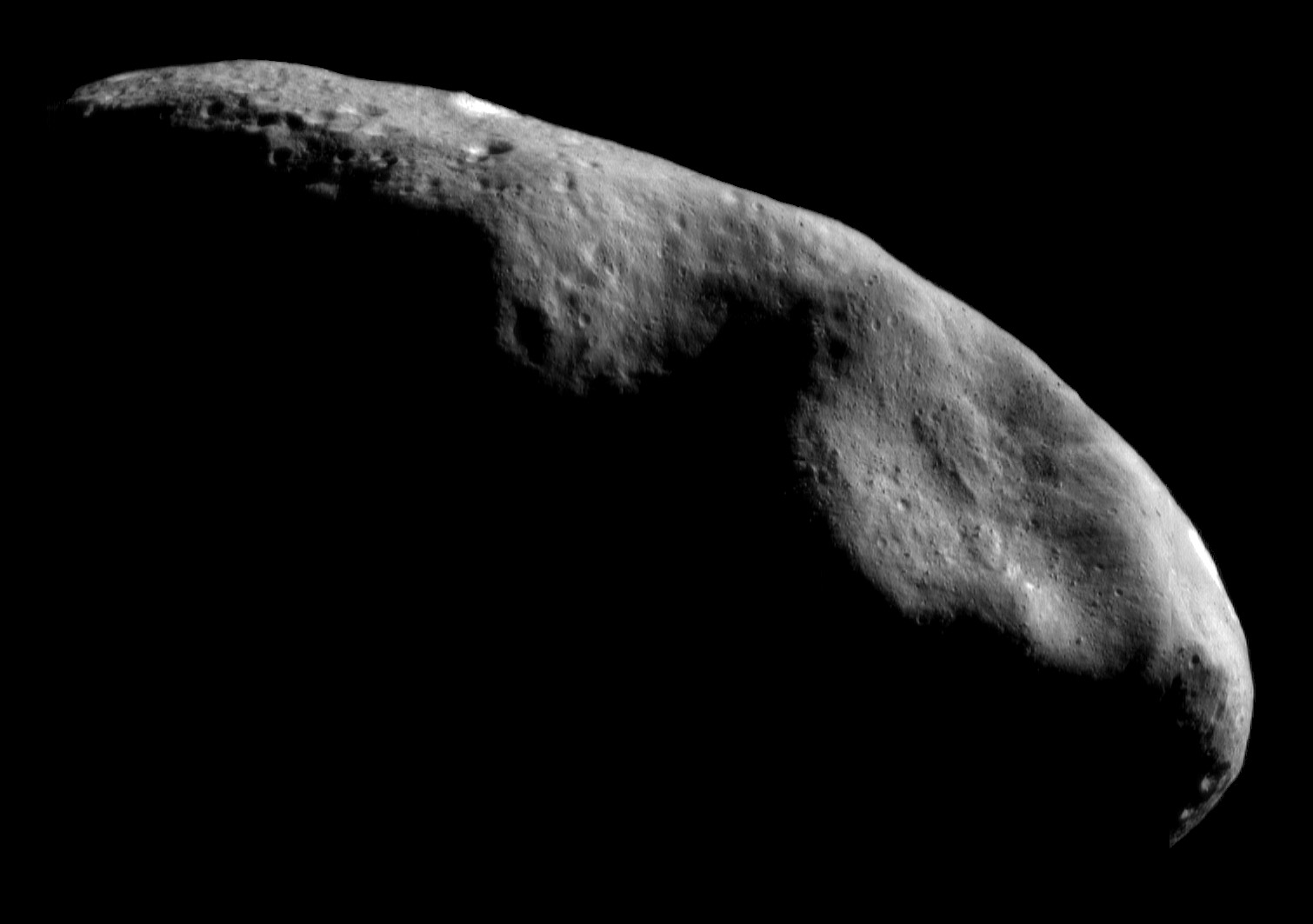
Named for what gets tracked
Every near-earth asteroid has its orbit logged and its next approach dated. Your checkout endpoint deserves the same.
433 Eros, from 200 km. NASA / JHU APL, NEAR Shoemaker, December 2000.
Edit this file. The monitors on the right follow it.
monitors:
  - name: Checkout API
    url: https://api.northwind.dev/checkout
    every: 30s
  - name: Auth service
    url: https://auth.northwind.dev/health
    every: 1m
  - name: Marketing site
    url: https://northwind.dev
every: 5mWrite it, watch it.
Live in four minutes
First, paste the endpoint you'd hate to lose.
Astroyds suggests sensible assertions from the first response it gets back.
Then decide who gets woken, and when.
Bring your Slack, PagerDuty or plain phone numbers. Rotations import from a calendar.
Ship it, and sleep through the night.
When something does break, the timeline writes the postmortem's first draft for you.
- Status200 OK
- Response time< 800 ms
- Content typeapplication/json
- Slack #payments-alerts0 min
- Page Priya N., then Tomás R.3 min
- Call Dana K. (Eng lead)15 min
- 03:12:40Frankfurt and London fail the 800 ms assertion
- 03:12:41Posted to #payments-alerts
- 03:15:40Paged Priya N.
- 03:16:02Acknowledged from phone
- 03:24:55Rolled back deploy 8f3a1c
- 03:26:11All regions passing · 14 min total
Simple, per workspace |
Scout$0 forever | Orbit$29 per month | Fleet$149 per month |
|---|---|---|---|
| Monitors | 10 | 75 | 500 |
| Fastest interval | 5 minutes | 30 seconds | 30 seconds |
| Regions per check | 3 | 12 | All 24 |
| Seats | 2 | 10 | Unlimited |
| Alerting | Email, Slack | + SMS, phone, PagerDuty | + escalation policies |
| Status pages | 1, on astroyds.page | 3, custom domain | Unlimited, private pages |
| History kept | 30 days | 1 year | 3 years |
| Single sign-on | Not included | SAML and SCIM | |
| Start on Scout | Start on Orbit | Start on Fleet |
Prices in US dollars, billed monthly. Annual billing takes two months off. Every plan starts with a 14-day trial of Fleet.
Fair questions
What counts as a failure?
A check fails when an assertion fails in at least two regions within the same interval. One slow hop from one city is logged, but nobody is paged for it. You can tighten that to a single region per monitor.
Where do the probes run?
From 24 regions across five continents, on three different cloud providers, so an outage at one of them never looks like an outage at yours.
Can I keep monitors in Git?
Yes. Commit an astroyds.yml to any repository and the workspace follows it on every push. Edits made in the dashboard open a pull request back to that file.
Will it page me at 3am for nothing?
That is the thing we work hardest to avoid. Multi-region agreement, retries before alerting and maintenance windows keep pages for real problems. Every page has a "this was noise" button that tunes the monitor.
Do you monitor internal services?
On Fleet, a small private agent runs inside your network and reports outbound only, so nothing has to be exposed to the internet.
What happens when I go over my plan?
Nothing stops. We tell you, keep checking, and you choose whether to upgrade or pause monitors at the end of the month.
Is Astroyds available now?
Astroyds is in early access. Request a workspace below and we will set it up with you, usually within two working days.
Start with one endpoint
Name your workspace and we'll email you an invitation, usually within two working days. No card needed.